Do Androids Dream of Electric Sheep?
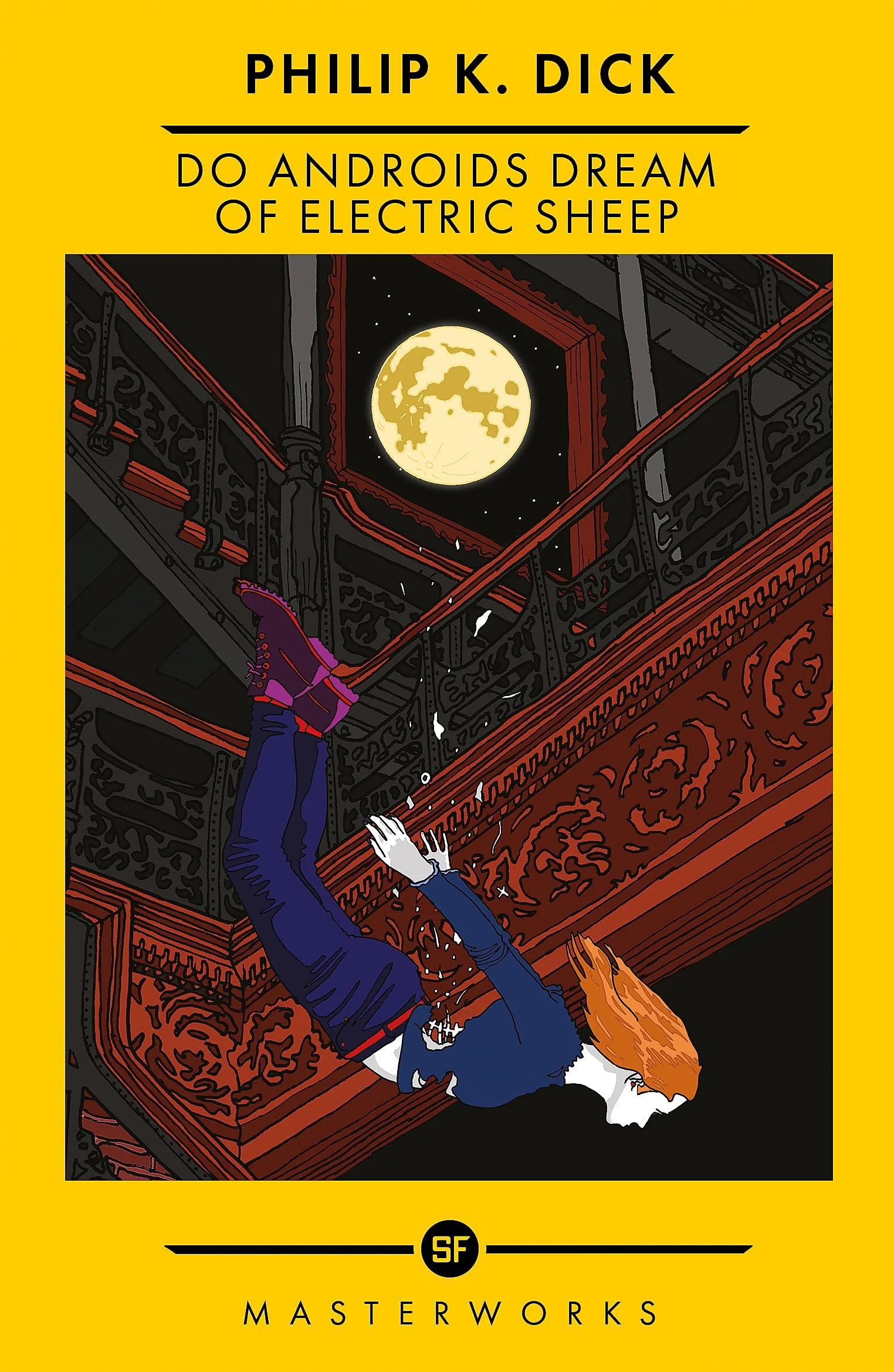
Do Androids Dream of Electric Sheep? (1968) opens with a “merry little surge of electricity” waking Rick Deckard, and from that moment onward, nothing feels entirely steady. In a society where emotions can be dialled in like morning radio, people still ache in recognisably human ways.
We follow Rick Deckard, a bounty hunter tasked with “retiring” androids who look—and increasingly behave—alarmingly close to humans. His goal sounds simple enough: earn enough bounty money to buy a real animal to replace his electric sheep. Yet the novel presses us to consider a deeper question: what does it mean to be human when imitation becomes nearly perfect?
Then there’s John Isidore, who lives alone in a decaying apartment building, a “special” marked by cognitive decline from radiation exposure. Society treats him as less-than—unfit for emigration, unfit for much of anything. But where Rick operates on logic and survival, Isidore operates on emotion. He feels deeply. He believes in connection. He fumbles toward kindness in a world that offers him none in return. Isidore finds comfort in Mercerism, a strange, shared-reality religion in which people experience pain and unity through an empathy box.
What tugged at me throughout was empathy—who shows it, who lacks it, and who gets denied it. Rick is sent to test the latest Nexus-6 models, which brings him face-to-face with Rachael Rosen: cool, sharp, and instantly unsettling. There’s an ambiguity to her. Is she a brilliant young woman, or an even more brilliant machine? Her composure unsettles Rick.
And Rachael is only the beginning. The escaped androids scattered across Northern California are quick, intelligent, and sometimes surprisingly sympathetic. Dangerous, yes—but also curious, frightened, and occasionally heartbreakingly earnest in their desire to survive. Each encounter Rick has with them pushes him further away from certainty. If an android can experience fear, longing, even tenderness… is “retiring” it really as straightforward as switching off a malfunctioning appliance?
When Rick checks on his electric sheep, he admits to his neighbour that his real one died years earlier from tetanus. The imitation is convincing but, of course, never alive. His neighbour looks at him and says, “It’s not the same.” That line ripples throughout the novel, touching every question it raises about authenticity, empathy, and the cost of pretending.
For all its radioactive dust and weary machinery, the novel feels deeply human. It asks whether we can trust our own emotional responses; what happens when someone—or something—reflects those emotions at us with uncanny accuracy. Rachael, especially, lingers in the mind. She’s part mirror, part mystery, and she makes you reconsider where the line between human and almost-human truly lies.
And perhaps that—empathy, imagination, and lingering uncertainty—is exactly why I keep returning to Do Androids Dream of Electric Sheep?. Through Mercerism, the novel reminds us that being human is not about origins or anatomy, but about the capacity to feel, to suffer, and to care, even in a world of fakes and machines. Whether or not Mercer is “real,” the act of believing seems to matter more than certainty. It left me thinking about how fear, hope, and loneliness shape us, and whether those tender, ordinary vulnerabilities connect us more deeply than any test of humanity ever could. If you enjoy novels that leave a soft weight of reflection on your mind, this one is well worth reading.