Enduring Love: My Thoughts
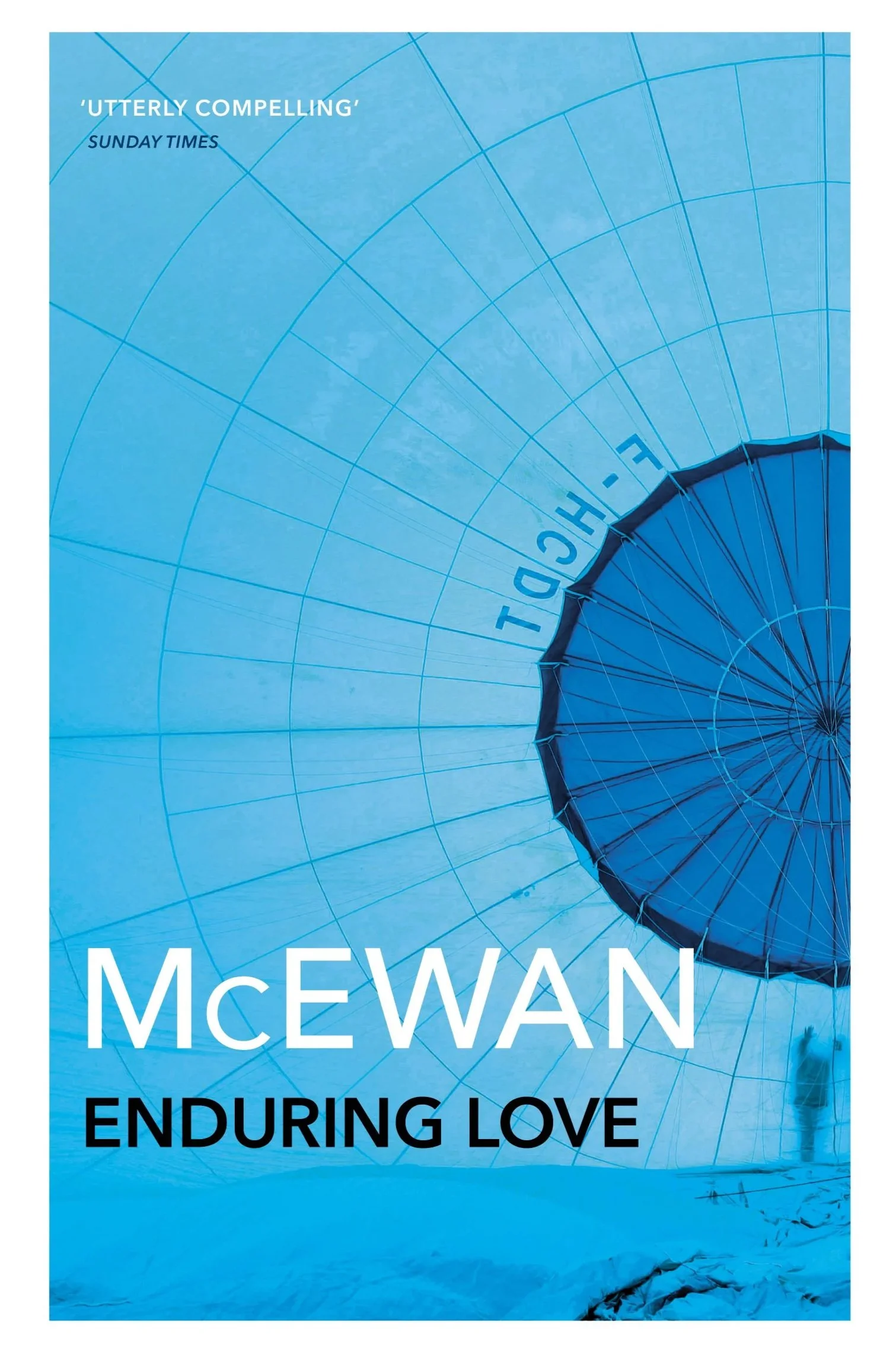
Thank you, Simon D., for recommending this book! I read Atonement years ago—now I remember the title—and I recall loving it.
In Enduring Love, Ian McEwan pulls you into a story that unfolds as much inside the mind as it does in the outside world. The novel opens with a devastating balloon accident, but the real tension comes from the collapse of certainty where reason meets emotion, and order frays at the edges.
The novel follows Joe Rose, a science writer whose orderly world is disrupted when a single moment binds him to Jed Parry, whose intense, disquieting fixation on Joe begins to shadow Joe’s life. Their lives intersect in the aftermath of the accident, and the tension between Joe’s logic, Jed’s fervor, and Clarissa’s (Joe’s partner) grounded warmth drives the novel’s unfolding conflict.
Joe, ever the rational thinker, handles trauma the only way he knows how: by dissecting it. He rewinds every second of the accident, searching for cause and control, using logic as both lifeline and armor. It helps him stay steady, but it also keeps him slightly removed from his own heart. His 7-year relationship with Clarissa also begins to strain.
When Jed enters the picture, Joe’s carefully arranged world tilts. Jed’s fixation is wild, emotional, and deeply unsettling, both in its intensity and its religious implications. His presence forces Joe to confront the limits of reason, nudging him toward a space where certainty slips and self-trust falters.
Joe struggles to name what he feels—dread, guilt, apprehension—yet the words never quite carry the weight of the emotion. His mind circles the gap between thought and feeling, between what language can hold and what it can’t.
As the story deepens, the balloon accident lingers like an echo, and each person tries to stitch meaning into the senseless, through analysis, obsession, compassion. McEwan’s introspective narrative voice guides us through Joe’s unraveling, but as Joe loses his grip, so do we. His shifting certainty becomes an invitation to question truth, memory, and the reliability of the stories we tell ourselves. At one point, I even thought Jed was a figment of Joe’s imagination—that Jed’s fixation and stalking were not real.
In the end, Enduring Love—to me, feels like a meditation on how fragile love can be—and how long it can last when tested by fear, obsession, and the unpredictable mess of being human. It’s a story about the tension between clarity and chaos, the limits of logic, and the ways we try to keep ourselves and each other safe. Reading it, I wonder how much of love and life we can ever fully understand.
A side note: Clarissa’s love for Keats stirred something familiar in me. I’ve carried his words since I first read his letters to Fanny Brawne, and standing in the quiet room above the Spanish Steps where he took his final breath. It felt like stepping into the soft ache of his poetry. That brush with Keats’s world lingers in the background as I read Clarissa and her devotion to his work.