A Bright Cold Day: The Wonder of George Orwell
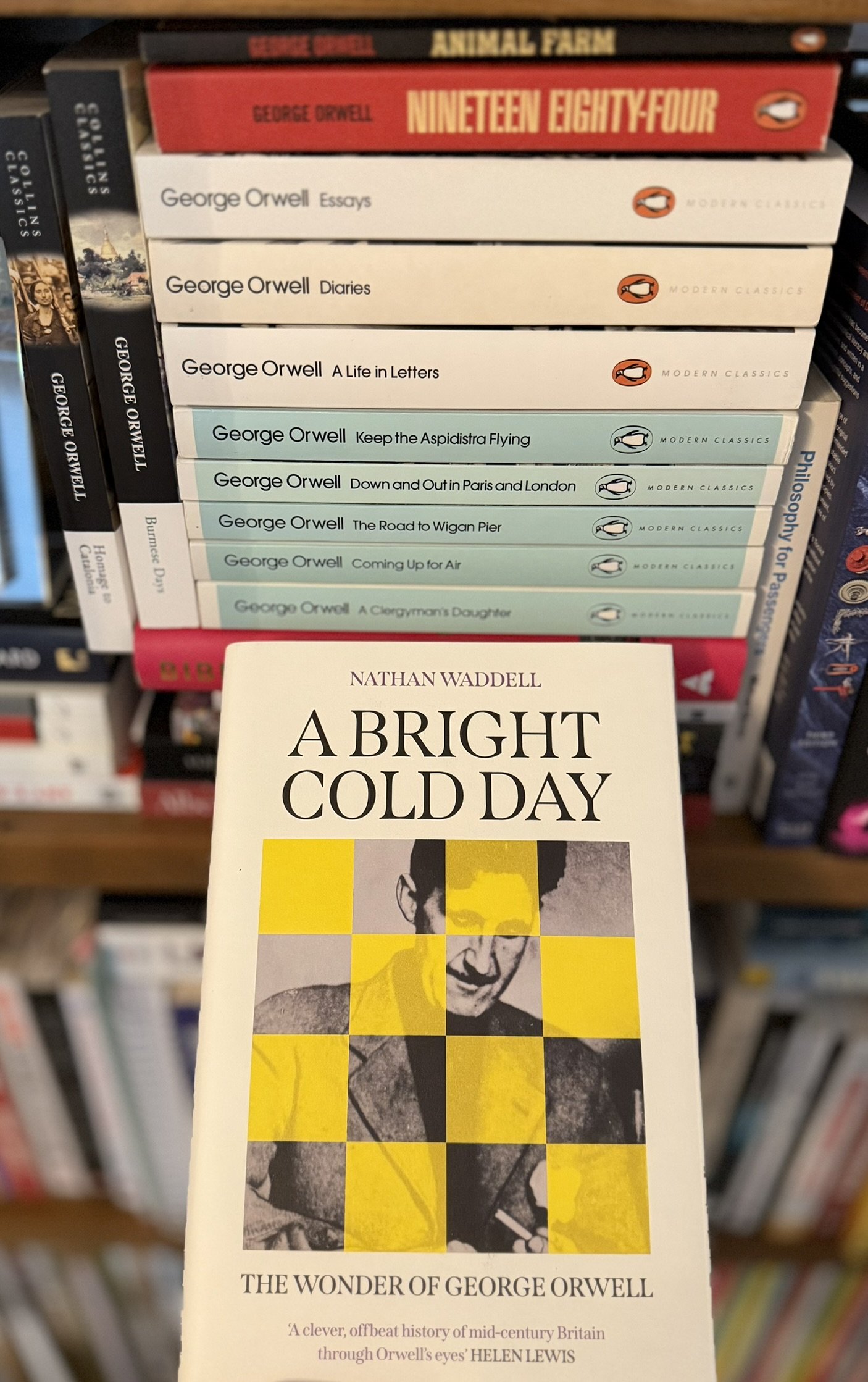
My Orwell Collection
I finished A Bright Cold Day: The Wonder of George Orwell by Nathan Waddell, and I can say this plainly: I have developed a healthy obsession with Orwell!
I’ll nickname the book ABCD. It made me curious about the person as a whole. Rather than following a conventional biographical approach, Waddell frames Orwell as ‘a life in a day’, using the fiction and essays as his starting point. He describes it as a ‘quasi-biography’, shaped by the rhythms of morning, daytime, evening, and night. This, for me, is what makes the book special. It is creative, associative, and surprisingly effective.
I gleaned several key points from ABCD:
Attention is Orwell’s superpower. He pays close attention to routine, ritual, repetition — the small stuff most of us sleepwalk through. Waddell’s core idea is that Orwell noticed ‘so much attention to the small nuggets and grains of everyday life’ and used them to expose hard questions about how we live, how we change, and what we tolerate (Waddell, 2025, p. xiv).
His life explains his range. The timeline reads like constant reinvention: Eton, Burma, Paris, tramping, teaching, writing novels, researching poverty and labour, fighting in Spain, working at the BBC, editing at Tribune, then writing in ill health on Jura.
It makes Orwell usable. Even if you think you already ‘know’ Orwell, ABCD upgrades him from ‘big ideas only’ to a practical lens for daily life. It trains attention and shows how power appears in habits, language, and small social moments.
Orwell is more than a warning label. Yes—authoritarianism, propaganda, censorship: all real. But incomplete. He’s anti-totalitarian and suspicious of concentrated power, especially when propaganda bends reality and language. He also liked fishing, birds, gardens, and had opinions about toast. I loved the ‘Pubs’ chapter (Evening).
The coda makes a point I love: after his death, his name became a symbol for huge principles like freedom, decency, and truth. ABCD invites us to enjoy the other Orwell, too, including the down-to-earth one with habits, contradictions, and very human failings.
Next, I want to follow Waddell’s thread and go deeper into the ideologies Orwell wrestled with: imperialism, fascism, socialism (and democratic socialism), authoritarianism, nationalism, and capitalism (the ‘machine’ logic that tries to turn people into cogs).