Ronja the Robber’s Daughter
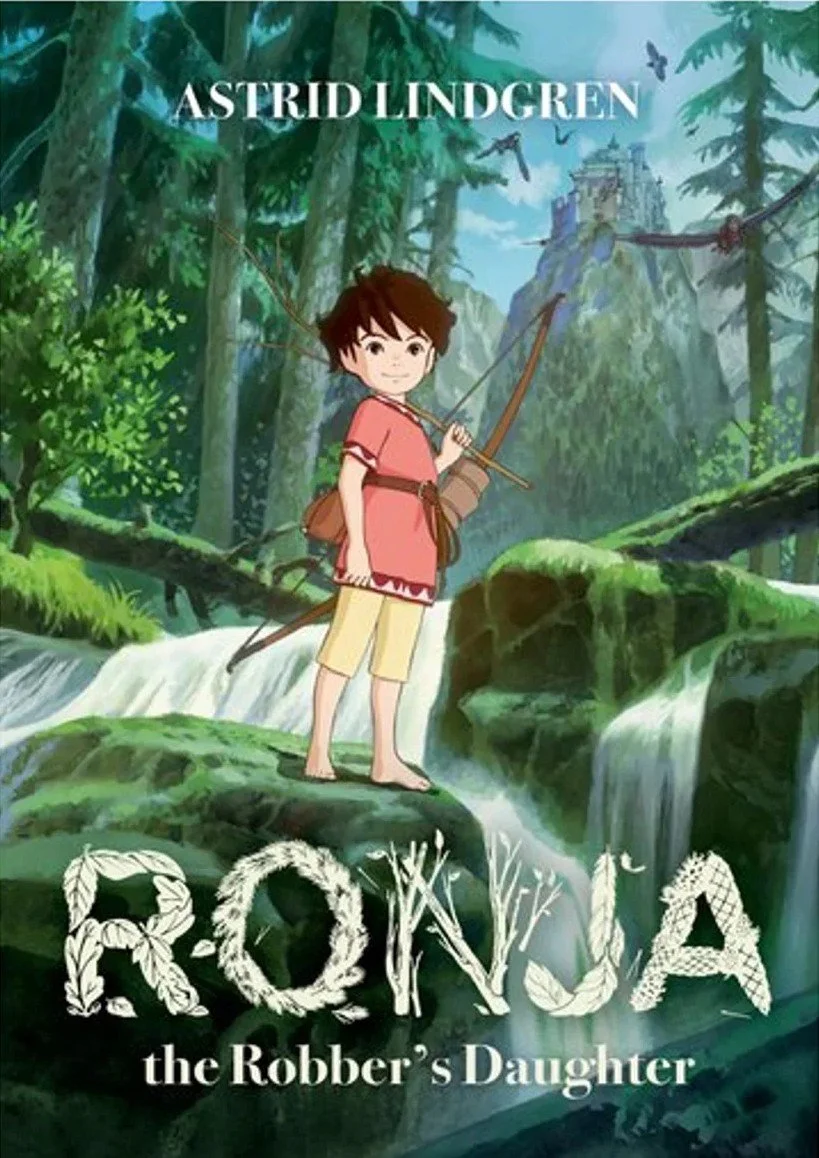
Ronja the Robber’s Daughter by Astrid Lindgren is my final book for 2025. It felt exactly right, closing the last page of the last chapter on 31 December, which is all about thresholds, growing up, and refusing to accept the way things have always been. I picked it up very deliberately as “my older-child Astrid Lindgren”—something still rooted in children’s literature but written for readers ready for a wilder, more morally complicated world. I expected an interesting story, because that’s simply what Lindgren does. I got that, of course. But what gripped me most was how unusual this particular story is, and how much of its power sits in the children forcing the adults to change.
The basic set-up sounds like a folktale told by the fire. Ronja is born during a thunderstorm in Mattis’s castle, the daughter of robber chieftain Mattis and his wife Lovis. On that same wild night, lightning splits the castle in two, leaving a deep chasm that divides the fortress and foreshadows the rift between two rival bands of thieves. Years later, the rival chief Borka moves his robbers into the other half of the sundered stronghold, and his son Birk grows up just across the gap. Ronja meets Birk, and their friendship becomes the bridge between two feuding clans who would rather cling to their grudges than admit any kind of kinship.
I didn’t expect how much I would come to love Ronja as a person. She is fierce without being flawless, stubborn yet thoughtful. Her loyalty to her parents and the robbers’ hall is very real—she adores Mattis and Lovis, and she enjoys the noisy camaraderie of the gang—but she cannot shut off the part of herself that recognises their life for what it is: theft and violence dressed up as tradition. A lot of the book’s tension lives in that push and pull, in the way she argues with Mattis, stands her ground, and still longs for his love and approval. She is a child trying to work out how to be decent inside an indecent system.
The forest itself becomes her true second home, maybe even her truest one. Lindgren gives Ronja long, unsupervised days among trees, rocks, rivers and caves. The woods are full of things that do not fit neatly into “friend” or “enemy”: harpies, grey dwarves, gnarled creatures who are silly on one page and menacing on the next. It’s not a soft, safe landscape. It’s full of risk, brutal weather and sudden fear. But it is also where Ronja feels most fully herself, away from robber codes and family expectations. Out there, she tests her courage and learns how to navigate danger without anyone stepping in. There is a sense that the forest teaches her how to live—not by protecting her from harm, but by forcing her to listen, adapt and survive.
Birk, Borka’s son, is the counterbalance to Ronja. He grows up on the other side of the chasm, the only other child in this world of grown men, and when they first meet, there is both rivalry and recognition. They really are equals. Ronja saves Birk; Birk saves Ronja. They fight, sulk, tease and test each other’s limits. There is no sense that one is the “real” hero and the other a sidekick. Their friendship is a kind of stubborn pact against the hatred their parents have inherited and nurtured, and this is one of the things I found most moving about the book: two children deciding that blood feuds need not be destiny.
The adults, thankfully, are not cardboard villains either. Mattis in particular is fascinating. He is boisterous, childish in his own way, driven by love and pride and a hot temper that makes him do unforgivable things. He is also capable of immense tenderness. There are moments where we can see that he is a man who roars his feelings into the world, and who has to learn that love cannot simply be ordered or defended at sword-point. Borka is less vividly drawn but still recognisable: stubborn, defensive, clinging to pride in the face of humiliation. Both men have to be dragged, kicking and screaming, towards any peace.
Lindgren threads the theme of fear and belonging through the forest scenes with great care. Mattis tells Ronja to watch out for all sorts of dangers in the woods, and she does—but she also grows into a kind of partnership with the place. The woods are less terrifying when Ronja stops seeing them as an enemy and starts moving as if she belongs there. It’s an idea that works on several levels—about nature, communities and even families.
Reading this as an adult, I found the emotional stakes surprisingly sharp. The adventure elements, such as harpies shrieking in the sky, long winters in caves, and risky forays through dangerous terrain, are enjoyable on their own terms, but the real drama is emotional. The arguments between Ronja and Mattis (and Ronja and Birk) cut deep; harsh words spoken in anger leave marks. The possibility that love might not be enough if nobody is willing to change feels real. Lindgren respects young readers’ capacity for complexity; she doesn’t smuggle the hard things in as a lesson; she lets them exist on the page.
As a final book of the year, it felt fitting. I wanted something from Lindgren that wasn’t aimed at very small children, something with more weather. Ronja the Robber’s Daughter made me think about what is inherited from one generation to the next (i.e., not just castles and caves and family names) can be passed on like heirlooms (i.e., habits of hatred, rigid ideas of honour, patterns of hurt). Then it shows two children standing there, simply saying, “No.”
For me, this is very much a children’s book that adults can fully enjoy, with particular resonance for anyone thinking about rebellion, chosen family, and how to repair what has been handed down. It will suit readers who like their children’s fiction with strong character work, a vivid sense of place, and a willingness to question the supposed glamour of outlaw life. So do those who enjoy stories where the magic sits more in atmosphere—in forests, storms, and wild (or fantastical) creatures.
What stays with me most, after closing the book, is the image of two children on the edge of a ravine, or deep in the woods, choosing each other over the safety of old loyalties. The story suggests that peace is not something that appears from nowhere; it is built, often painfully, by those willing to disappoint the people they love to make a life that harms fewer others. That feels like a bold note to end a year on.
P/S: I also wrote a short piece for my LinkedIn, and I couldn’t help relating the story to leadership and culture.